

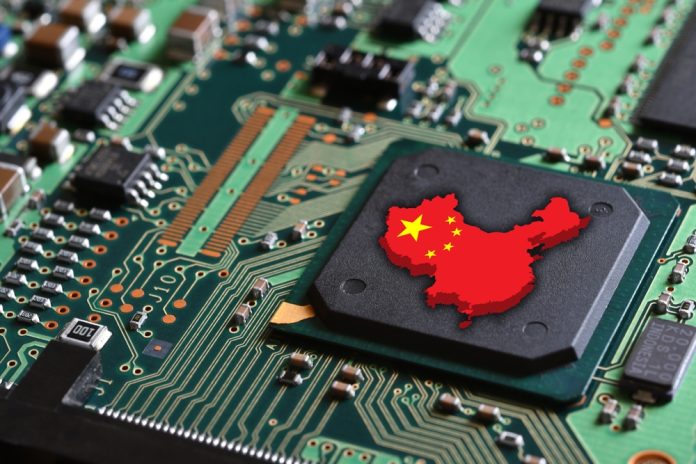

When Chinese AI company DeepSeek released its R1 large language model in January, America’s Nasdaq index fell 3% in a single day? This wasn’t just another AI announcement�it signaled a fundamental shift in the global AI race? The model rivaled leading U?S? AI systems while using significantly less computing power, and it was made available open-source, free for anyone to download and adapt for commercial use? Today, China’s open-source approach is challenging America’s closed development model in ways that could reshape the entire AI landscape?
The Chinese Open-Source Advantage
China’s AI industry has embraced open-source development as a strategic advantage? Companies like DeepSeek, Alibaba, Baidu, Zhipu, and Moonshot AI now allow users to download their cutting-edge models, examine how they work, and customize them for specific applications? This contrasts sharply with the secretive, closed development approach of most U?S? companies like OpenAI, Anthropic, and xAI?
The benefits are substantial: open-source models can be fine-tuned for specific industries, run on internal servers to protect sensitive data, and make state-of-the-art AI affordable for researchers, students, and entrepreneurs? As Kai-Fu Lee, CEO of 01?AI and former president of Google China, notes from personal experience: “Decades later, it is still being used and updated? This has shown me the power of open-source communities and the longevity of a shared resource?”
This approach has accelerated development through collaborative innovation? Engineers across different Chinese companies study each other’s models and thousands of independently developed variants, allowing them to cherry-pick features and make incremental improvements? The result? Today, 10 top-ranked open-source AI models are almost all Chinese, prompting former Google CEO Eric Schmidt to warn that U?S? companies risk ceding open-source AI to China completely?
America’s Infrastructure Crisis
While China builds its open-source ecosystem, America faces a critical infrastructure challenge that threatens its AI ambitions? According to Financial Times analysis, data centers in the U?S? currently represent about 51GW of electricity capacity�5% of the country’s peak demand? But the situation is becoming critical?
From 2026, five data centers will each draw at least 1GW of electricity�equivalent to a nuclear reactor’s output? An estimated 44GW of additional capacity will be required by new data centers over the next three years, but only 25GW will be available, leaving a 19GW gap (40% of needed power by 2028)? Microsoft CEO Satya Nadella bluntly states: “The biggest issue we are now having is not a compute glut, but it’s power?”
This power crunch creates a stark contrast with China’s energy expansion? In 2024 alone, China added 429GW of new power capacity�more than one-third of the entire U?S? grid�while the U?S? contributed just 51GW? The timing couldn’t be worse for American AI companies, as OpenAI CEO Sam Altman warns: “A certain risk is if we don’t have the compute, we will not be able to generate the revenue or make the models at this kind of scale?”
The Regulatory Divide
As infrastructure challenges mount, America faces another hurdle: regulatory fragmentation? President Donald Trump recently announced plans to sign an executive order that would block states from enacting their own AI regulations, arguing that “There must be only One Rulebook if we are going to continue to lead in AI?”
This move comes amid bipartisan opposition, with over 35 state attorneys general warning Congress that overriding state AI laws could have “disastrous consequences?” Florida Governor Ron DeSantis argues: “The rise of AI is the most significant economic and cultural shift occurring at the moment; denying the people the ability to channel these technologies in a productive way via self-government constitutes federal government overreach?”
Meanwhile, the U?S? Department of Commerce is reportedly planning to allow Nvidia to export its H200 AI chips to China, though exports would be limited to chips roughly 18 months old? This decision conflicts with Congressional concerns about national security, as Senators Pete Ricketts and Chris Coons introduced the SAFE Chips Act on December 4, which would block advanced AI chip exports to China for 30 months?
The Hardware Competition Intensifies
The AI hardware landscape is also shifting? Google’s tensor processing unit (TPU) chip is emerging as a serious competitor to Nvidia’s dominance, helping Google’s Gemini 3 models outperform OpenAI’s GPT-5 and prompting OpenAI to declare a “code red?” Google plans to more than double TPU production by 2028, with analysts predicting Google could generate up to $13 billion in revenue for every 500,000 TPUs sold externally?
This hardware competition comes at a critical time? Chinese companies face U?S? export restrictions on Nvidia chips, forcing them to focus on efficiency and develop models that require less computing power? As Kai-Fu Lee explains: “Forced to play catch-up, China’s AI industry has focused on efficiency, developing models that require less computing power and so are cheaper to use?”
Looking Toward 2030
What does this mean for the future of AI? According to MIT Technology Review senior AI editor Will Douglas Heaven: “What will things be like in 2030? My answer: same but different?” The AI Futures Project predicts transformative impacts exceeding the Industrial Revolution, while Princeton researchers Arvind Narayanan and Sayash Kapoor argue technological adoption moves at human speed?
FT global tech correspondent Tim Bradshaw offers a more nuanced view: “In five years, I expect the AI revolution to have proceeded apace? But who gets to benefit from those gains will create a world of AI haves and have-nots?” This divide could be exacerbated by the different approaches: China’s open-source “Android strategy” aiming for broad reach versus America’s closed “iOS approach” focusing on premium products?
The future may resemble the smartphone operating system rivalry? While iPhones are popular with wealthy consumers and highly profitable, Android powers over 70% of smartphones globally? China’s AI companies are following a similar strategy, aiming for broader reach through open technologies? But as with smartphones, both approaches can coexist and thrive in different market segments?
The question isn’t which country will “win” the AI race, but how different development models will shape global AI adoption, innovation, and economic impact? As infrastructure constraints, regulatory debates, and hardware competition intensify, the next five years will determine whether open-source collaboration or closed proprietary development drives the next wave of AI advancement?