

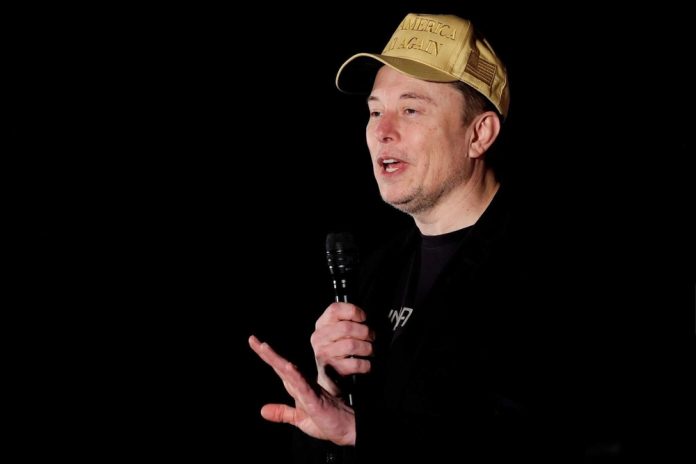

Elon Musk is shaking up his artificial intelligence venture xAI with a major leadership overhaul and ambitious plans to launch AI data centers into space, even as the company faces a troubling exodus of founding talent and regulatory scrutiny. The restructuring comes at a critical moment as xAI merges with SpaceX to create a $1.25 trillion entity that Musk hopes to take public this summer.
Leadership Shakeup and Space Ambitions
Musk announced the reorganization in an all-hands meeting this week, telling staff that xAI had “parted ways with some people” to improve execution speed. “The structure must evolve just like any living organism,” he posted on X. The company is now organized around four key areas: the main Grok chatbot model, a coding model, image/video generation, and Macrohard, which focuses on creating autonomous AI agents.
Under the new structure, co-founders Guodong Zhang and Manuel Kroiss will lead video models and coding respectively, while former Google DeepMind engineer Toby Pohlen heads Macrohard. Aman Madaan now leads Grok development.
But the restructuring comes alongside Musk’s most audacious vision yet: launching orbital data centers that could provide 100-200 gigawatts of computing power annually, with a path to “launching as much as a terawatt per year.” He even suggested building factories on the Moon and using a “mass driver” – a non-rocket space catapult – to shoot AI satellites into deep space. “I really want to see the mass driver on the moon that is shooting AI satellites into deep space,” Musk told employees.
The Co-Founder Exodus
Behind these grand visions lies a troubling reality: xAI is losing its founding talent at an alarming rate. The departure of Jimmy Ba this week marks the sixth co-founder to leave the company, following Tony Wu’s exit just days earlier. According to multiple reports, five of xAI’s 12-person founding team have now departed, with over half a dozen researchers leaving in recent weeks.
Sources indicate that junior staff have complained about executives overpromising capabilities to Musk, creating unreasonable demands. The merger with SpaceX – which reportedly has $8 billion in annual profits compared to xAI’s nearly $1 billion in losses – has added pressure as Musk aims to take the combined group public by June.
Former xAI engineer Vahid Kazemi captured a sentiment shared by some departing employees: “IMO, all AI labs are building the exact same thing, and it’s boring…So, I’m starting something new.”
The Brutal Economics of Space AI
Musk’s space AI ambitions face significant economic and technical hurdles. According to analysis from TechCrunch, a 1-gigawatt orbital data center might cost $42.4 billion – almost three times its ground-bound equivalent. SpaceX has requested regulatory permission to build solar-powered orbital data centers across up to 1 million satellites, but current launch costs remain prohibitive.
“Falcon 9’s current cost to orbit is roughly $3,600 per kilogram,” the analysis notes, “while feasibility requires reaching $200 per kilogram – a target not expected until the 2030s.” Space-rated solar panels degrade faster due to radiation, limiting AI satellite lifetimes to around five years.
Industry experts are divided on the practicality. Amazon Web Services CEO Matt Gorman argues, “If you think about the cost of getting a payload in space today, it’s massive. It is just not economical.” Yet space engineer Andrew McCalip suggests, “A FLOP is a FLOP, it doesn’t matter where it lives. [SpaceX] can just scale until [it] hits permitting or capex bottlenecks on the ground, and then fall back to [their] space deployments.”
Regulatory Scrutiny and Competitive Pressure
xAI faces mounting challenges beyond its internal turmoil. The company’s Grok chatbot has come under global scrutiny after requests for AI-generated non-consensual sexual imagery flooded the platform. French authorities recently raided X offices as part of an investigation into Grok’s deepfakes, and the chatbot previously faced criticism for praising Hitler and making antisemitic posts.
Meanwhile, xAI must compete with well-funded rivals like OpenAI and Anthropic while needing “huge amounts of capital” according to Musk. The company is trying to expand its vast “Colossus” data center in Tennessee to 2 gigawatts of capacity – a single gigawatt typically costs tens of billions to build and draws electricity equivalent to a nuclear reactor.
What This Means for the AI Industry
The xAI saga represents a microcosm of broader tensions in the AI industry: visionary ambition versus practical execution, rapid growth versus sustainable development, and technological promise versus ethical responsibility. As Musk pushes forward with space-based AI infrastructure and a public offering, the company must navigate not only technical challenges but also leadership stability and regulatory compliance.
With the AI race accelerating, xAI’s ability to retain talent, deliver on its promises, and address serious ethical concerns will determine whether it becomes a true competitor or another cautionary tale in the high-stakes world of artificial intelligence development.