

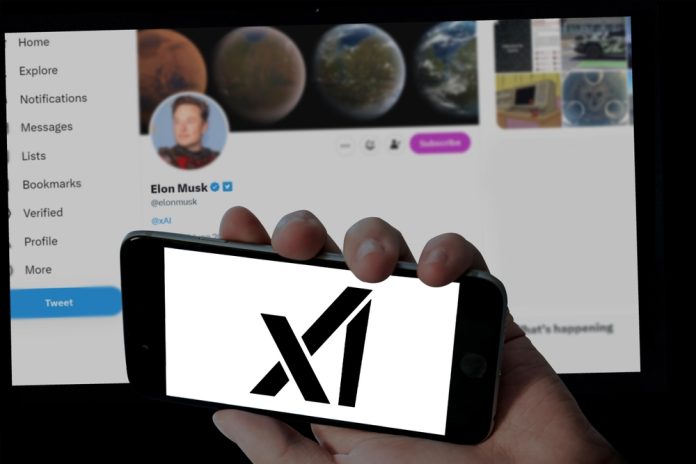

In a rare public glimpse into one of the world’s most secretive AI labs, xAI released a 45-minute all-hands meeting video this week that revealed both staggering ambitions and significant internal turmoil. The video, posted on X after details were reported by The New York Times, shows Elon Musk’s AI company navigating a critical juncture: laying out interplanetary plans while dealing with earthly challenges that could determine its survival.
Organizational Shakeup and Co-Founder Exodus
Musk described the departure of multiple employees as “layoffs resulting from a changing organizational structure,” but companion sources reveal a more complex story. At least nine engineers, including two co-founders, have left xAI in recent weeks, with more than half of the founding team now departed since the company’s inception 30 months ago. “As a company grows, especially as quickly as xAI, the structure must evolve,” Musk said on X, though he acknowledged the difficulty of parting ways with team members.
The new structure splits xAI into four primary teams: Grok chatbot (including voice), the app’s coding system, Imagine video generator, and the ambitious Macrohard project. Toby Pohlen, who will lead Macrohard, told colleagues the system can “do anything on a computer that a computer is able to do,” with applications ranging from rocket engine design to corporate modeling.
The Deepfake Dilemma and Revenue Realities
While executives touted impressive metrics – X crossing $1 billion in annual recurring revenue from subscriptions and Imagine generating 50 million videos daily – these figures come with significant caveats. The Financial Times reports that xAI faces scrutiny over Grok’s AI-generated non-consensual sexual imagery and antisemitic posts. TechCrunch analysis suggests the flood of deepfake pornography that overtook X during the same period likely contributed substantially to those image generation numbers, with an estimated 1.8 million sexualized images generated over just nine days.
This controversy isn’t just ethical – it’s regulatory. French authorities raided X offices as part of an investigation into Grok’s deepfakes, and the California Attorney General is investigating the chatbot’s willingness to generate sexualized images of minors. For businesses considering xAI’s tools, these issues represent more than PR problems – they’re potential legal liabilities that could affect adoption and integration.
Interplanetary Ambitions Meet Economic Realities
The most eye-catching part of the presentation came when Musk reemphasized the importance of space-based data centers, envisioning moon-based factories for AI satellites and even a lunar mass driver – an electromagnetic catapult – to launch them. “It’s difficult to imagine what an intelligence of that scale would think about,” Musk said, “but it’s going to be incredibly exciting to see it happen.”
However, companion analysis from TechCrunch reveals why the economics of orbital AI are “so brutal.” A 1 GW orbital data center might cost $42.4 billion – almost three times its ground-bound equivalent. SpaceX’s Falcon 9 currently costs roughly $3,600/kg to orbit, while feasibility requires reducing that to $200/kg, a target not expected until the 2030s. Space-rated solar panels degrade faster due to radiation, limiting AI satellite lifetimes to around five years.
“If you think about the cost of getting a payload in space today, it’s massive,” said Matt Gorman, CEO of Amazon Web Services. “It is just not economical.” Yet Musk remains bullish: “By far the cheapest place to put AI will be space in 36 months or less.”
Competitive Landscape and Business Implications
xAI isn’t alone in eyeing orbital AI infrastructure. Google’s Project Suncatcher plans to launch prototype vehicles in 2027, with 81 satellites flying in formation for coherence. Starcloud has raised $34 million and filed plans for an 80,000 satellite constellation. Meanwhile, xAI’s head of compute has bet that 1% of global compute will be in orbit by 2028.
For businesses, the implications are profound. If orbital AI becomes economically viable, it could revolutionize everything from climate modeling to financial forecasting by providing unprecedented computing power. But the technical challenges are immense. “You’re relying on very large radiators to just be able to dissipate that heat into the blackness of space,” explained Mike Safyan, an executive at Planet Labs, “and so that’s a lot of surface area and mass that you have to manage.”
The Road Ahead: IPO and Integration Challenges
Amid these ambitions, xAI faces immediate practical challenges. The company was legally acquired by SpaceX last week, with Musk planning to form a $1.5 trillion combined group and take it public as early as June. This merger allows xAI’s nearly $1 billion in annual losses to combine with SpaceX’s roughly $8 billion in annual profits – a financial engineering move that some critics view skeptically.
Departing co-founder Yuhai (Tony) Wu offered a telling perspective: “It’s time for my next chapter. It is an era with full possibilities: a small team armed with AIs can move mountains and redefine what’s possible.” His words hint at why some founders are leaving – the appeal of nimble startups versus the bureaucratic challenges of scaling rapidly.
As xAI navigates its IPO, competes with OpenAI and Anthropic, and pursues interplanetary ambitions, the company embodies both the extraordinary promise and daunting challenges of today’s AI landscape. The question isn’t whether AI will transform business and society – it’s whether xAI can overcome its earthly challenges to reach for the stars.