


Imagine a single $6 billion deal that could reshape how artificial intelligence transforms industries from healthcare to finance. That’s exactly what’s happening in North Carolina, where Corning’s manufacturing expansion for Meta Platforms is quietly building the physical backbone for America’s AI revolution. But beneath the surface of this massive infrastructure investment lies a complex web of technological risks and ethical dilemmas that could determine whether AI’s promise delivers – or derails.
The Infrastructure Behind the Intelligence
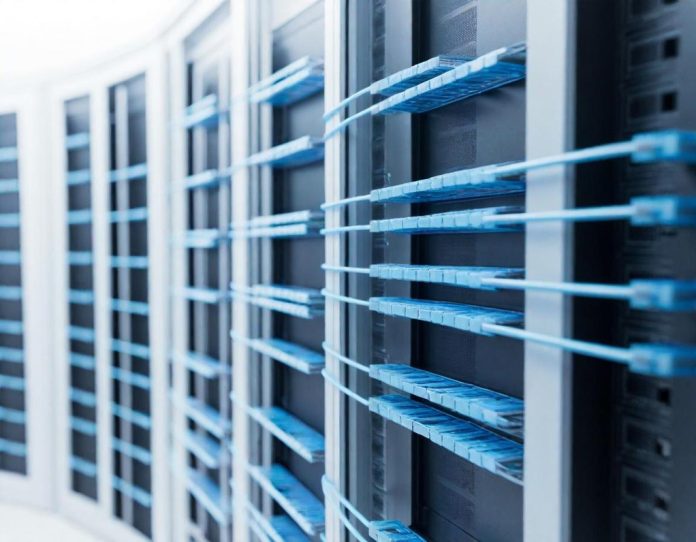
Corning’s multiyear agreement with Meta represents more than just another corporate partnership – it’s a strategic bet on the physical requirements of generative AI. The company will supply optical fiber, cable, and connectivity products to support Meta’s $600 billion data center construction initiative, with 26 facilities already operational or under development across the United States. This expansion will increase Corning’s North Carolina workforce by up to 20%, sustaining over 5,000 jobs while accelerating domestic manufacturing capabilities.
“Together with Meta, we’re strengthening domestic supply chains and helping ensure that advanced data centers are built using U.S. innovation and U.S. advanced manufacturing,” said Wendell Weeks, Corning’s chairman and CEO, during a recent earnings call. The numbers tell a compelling story: Corning’s optical communications business saw Q4 sales jump 24% year-over-year to $1.7 billion, with enterprise business growing 61% annually – driven largely by what executives call “outstanding” adoption of Gen AI products.
The Manufacturing Momentum
This isn’t Corning’s first major manufacturing expansion for tech giants. Just months earlier, Apple committed $2.5 billion through its American Manufacturing Program to fund iPhone and Apple Watch cover glass production at Corning’s Harrodsburg, Kentucky facility. Both deals support Corning’s “Springboard” growth strategy, which has already exceeded initial targets – upgrading from $6 billion to $6.5 billion in annualized sales by year-end, and from $8 billion to $11 billion in incremental sales by 2028.
Edward Schlesinger, Corning’s executive VP and CFO, noted that “the growth we are seeing in optical communications is an important component of the Springboard upgrade we are providing today. We expect this segment to continue to drive significant growth. Our recent Meta announcement is a great proof point.”
The Dark Side of AI Acceleration
While companies race to build AI infrastructure, some industry leaders are sounding alarm bells about the risks of moving too fast without adequate safeguards. Dario Amodei, CEO of Anthropic, recently published a nearly 20,000-word essay warning about catastrophic risks from powerful AI systems. “Humanity is about to be handed almost unimaginable power and it is deeply unclear whether our social, political and technological systems possess the maturity to wield it,” Amodei wrote.
He predicts that within a few years, AI systems could become “much more capable than any Nobel Prize winner,” potentially enabling bioterrorism, massive job displacement, and authoritarian empowerment. “A disturbed loner [who] can perpetrate a school shooting, but probably can’t build a nuclear weapon or release a plague… will now be elevated to the capability level of the PhD virologist,” Amodei warned, highlighting how AI could democratize dangerous capabilities.
When AI Writes the Rules
The rush to implement AI extends beyond corporate boardrooms into government agencies, raising concerns about oversight and accuracy. The U.S. Department of Transportation is using Google’s Gemini AI to draft safety regulations for transportation systems, aiming to reduce rule-making time from weeks or months to under 30 days. While this promises efficiency, DOT staffers have expressed concerns about AI hallucinations and errors potentially leading to flawed laws, injuries, or deaths.
Gregory Zerzan, DOT’s top lawyer, defended the approach by arguing, “We don’t need the perfect rule on XYZ. We don’t even need a very good rule on XYZ. We want good enough.” This “good enough” mentality troubles experts who point to previous instances where AI hallucinations led to lawyers being fined and judges being fooled in court proceedings.
The Global Semiconductor Race
Corning’s expansion is just one piece of a global AI infrastructure puzzle. ASML, the Netherlands-based semiconductor equipment manufacturer, forecasts significant sales growth for 2026 driven by the AI boom, with expected net sales between �34 billion and �39 billion – up from �32.7 billion in 2025. The company’s Extreme Ultraviolet machines are in high demand for manufacturing logic chips, including Nvidia’s GPUs made by TSMC.
Christophe Fouquet, ASML’s CEO, attributed the strong outlook to customer confidence in AI demand, noting that companies are preparing for “a major addition of capacity” in the short term. This aligns with Nvidia CEO Jensen Huang’s assessment that the AI boom has “started the largest infrastructure build-out in human history.”
The Poison in the Machine
As AI systems proliferate, they face an unexpected threat: themselves. The growing problem of AI models being trained on AI-generated content leads to “model collapse,” where outputs drift from reality. Gartner predicts 50% of organizations will adopt zero-trust data governance by 2028 to combat this issue, but the challenge remains substantial.
Phaedra Boinodiris, an IBM distinguished engineer, emphasized that “just having the data is not enough. Understanding the context and the relationships of the data is key. This is why you need to have an interdisciplinary approach to who gets to decide what data is correct.”
The Physical AI Revolution
Beyond data centers and fiber optics, AI is moving into the physical world. According to recent surveys, 58% of global business leaders currently use physical AI in operations, with 80% planning to use it within two years. This includes everything from Hyundai’s Atlas humanoid robot to AI-powered manufacturing systems.
Andy Lonsberry, CEO and co-founder of Path Robotics, noted that “everyone’s getting really excited about it. Everybody wants to start prepping their facilities for this wave. And I think the adoption rate will be very, very fast, but I do think it’s gonna be a bit of a slower rollout of making those capabilities go from demo to fully functional.”
The Cybersecurity Imperative
As AI systems become more integrated into critical infrastructure, cybersecurity risks escalate. Manufacturing has been the most targeted industry for cyberattacks for four consecutive years, with high ransomware incidents. A staggering 87% of respondents in manufacturing, supply chain, and transportation sectors identify AI-related vulnerabilities as the fastest-growing cyber risk.
The stakes are high: Jaguar Land Rover’s recent cyberattack cost $260 million and caused a 24% revenue decline. Ed Nabrotzky, CEO of Dot Ai, warned that “we increasingly need to have full transparency of the process to know what’s happening” as AI systems become more complex and interconnected.
Balancing Progress with Prudence
The Corning-Meta deal represents both the tremendous opportunity and profound responsibility of America’s AI infrastructure build-out. As fiber optic cables snake across North Carolina to connect data centers that will power everything from healthcare diagnostics to financial algorithms, the question remains: Are we building infrastructure smart enough to handle the intelligence it will carry?
Amodei’s warning echoes through boardrooms and government agencies alike: “This is the trap: AI is so powerful, such a glittering prize, that it is very difficult for human civilisation to impose any restraints on it at all.” The $6 billion flowing into North Carolina’s manufacturing sector is just the beginning – the real test will be whether we can build not just faster networks, but wiser systems.