


Imagine walking into work tomorrow and discovering your manager has been replaced by an algorithm. For 15% of Americans, according to a new Quinnipiac University poll, this isn’t a dystopian nightmare – it’s a workplace reality they’d willingly embrace. The survey of 1,397 adults reveals a surprising openness to AI supervisors, even as 70% of respondents fear AI will decrease job opportunities overall. This tension between AI’s promise and peril is reshaping corporate hierarchies in what industry observers call “The Great Flattening.”
The Flattening Corporate Landscape
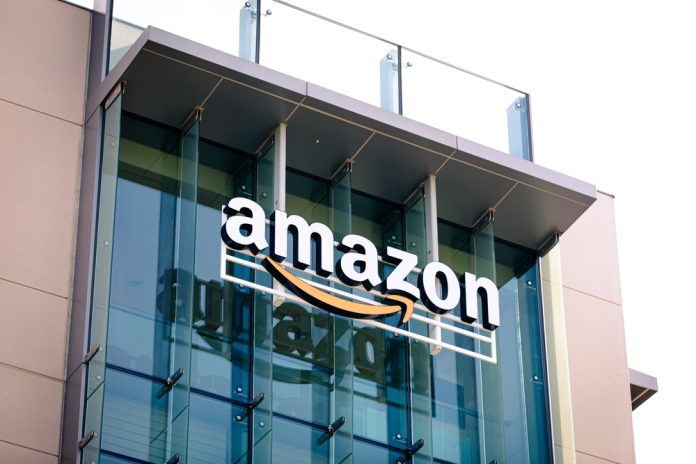
Companies aren’t just experimenting with AI bosses – they’re actively implementing them. Amazon has deployed AI workflows that replace middle management responsibilities, leading to thousands of managerial layoffs. Workday has launched AI agents that file and approve expense reports autonomously. Even Uber engineers built an AI model of CEO Dara Khosrowshahi to field pitches before actual meetings. These aren’t isolated experiments but part of a broader trend toward leaner, algorithm-driven organizations.
“We may start to see entire billion-dollar companies of one,” notes the primary source, suggesting a future where fully automated employees and executives could operate entire enterprises. This vision aligns with what BBC Technology reports as tech CEOs increasingly citing AI to justify mass job cuts. Companies like Google, Amazon, Meta, Pinterest, and Atlassian have all announced workforce reductions linked to AI developments, with Amazon cutting about 30,000 corporate workers since October partly to offset AI investment costs.
The Productivity Paradox
Why this sudden push toward AI-driven management? The answer lies in what tech leaders call “productivity gains.” Meta CEO Mark Zuckerberg recently declared that “2026 is going to be the year that AI starts to dramatically change the way that we work.” Block CEO Jack Dorsey was more direct: “A significantly smaller team, using the tools we’re building, can do more and do it better.”
Anne Hoecker, a partner at Bain, confirms this shift: “Leaders more recently are seeing these tools are good enough that you really can do the same amount of work with fundamentally less people.” Some companies report using code that is 25% to 75% AI-generated, indicating real productivity changes. Yet critics question whether AI is a genuine driver or a convenient narrative to mask cost-cutting and shareholder pressure.
Counterbalancing Perspectives
Not all AI developments point toward workforce reduction. Bluesky’s new AI app Attie represents a different approach – one focused on empowering users rather than replacing them. The app, which leverages Anthropic’s Claude technology, allows users to build custom feeds and eventually “vibe-code” their own social apps through natural language commands. “We think AI should serve people, not platforms,” says former Bluesky CEO Jay Graber, now chief innovation officer.
This people-first philosophy contrasts sharply with the management-replacement trend. Interim CEO Toni Schneider emphasizes: “It is an AI product, but it’s an AI product that’s very people-focused… We want to make sure that we use it to build things that really benefit people.” With $100 million in new funding and 43.4 million users, Bluesky’s approach suggests AI can augment rather than replace human capabilities.
The Hardware Foundation
Behind these software developments lies a hardware revolution that makes AI management possible. Samsung’s announcement of its first SSD with RISC-V cores instead of ARM processors represents a significant shift toward more efficient AI processing. The BM9K1 SSD promises 23% better energy efficiency, crucial for handling AI workloads without excessive power consumption.
This hardware advancement matters because AI supervisors require substantial processing power to manage complex workflows. As Samsung follows Western Digital’s lead in adopting RISC-V architecture, the entire ecosystem becomes better equipped to handle AI-driven management systems. The shift toward open instruction sets like RISC-V could accelerate AI adoption across industries by making the necessary hardware more accessible and efficient.
The Human Response
Despite these technological advances, human resistance remains significant. The Quinnipiac poll shows that while 15% would work for an AI boss, the majority clearly wouldn’t. Among employed Americans, 30% are concerned AI will make their jobs obsolete. This anxiety isn’t unfounded – tech giants plan to invest $650 billion in AI over the coming year, with Meta alone planning to nearly double its AI spending while implementing hiring freezes.
Terrence Rohan, a tech investor, offers a cynical perspective on CEO motivations: “Pointing to AI makes a better blog post. Or it at least doesn’t make you seem as much the bad guy who just wants to cut people for cost-effectiveness.” This suggests that while AI enables real productivity gains, it also provides convenient cover for traditional cost-cutting measures.
Looking Forward
The future of AI in management isn’t predetermined. While some companies pursue full automation, others like Bluesky demonstrate how AI can empower rather than replace. The hardware revolution exemplified by Samsung’s RISC-V adoption will determine how quickly AI management systems can scale. And human attitudes – currently divided but leaning skeptical – will ultimately shape adoption rates.
As organizations navigate this transition, the key question isn’t whether AI will replace managers, but what kind of AI-human collaboration will prove most effective. The 15% willing to work for AI bosses represent an early adopter segment that could either pioneer new workplace models or serve as cautionary tales. What’s clear is that “The Great Flattening” has begun – and its impact will extend far beyond corporate org charts.